The international conference held in Vienna, titled “Healing Wounded Memories: The Responsibility of Churches to Heal,” concluded this weekend with an appeal for stronger networking and more intensive local, regional, and international cooperation among churches and socio-political actors.
The conference, which took place from November 13 to 16, also marked the conclusion of the project of the same name, initiated by the PRO ORIENTE Foundation.
A total of 70 participants from 25 countries took part in the Vienna conference, including clergy, monastics, academics, and international experts from various fields.
Most participants came from Southeastern Europe, the Middle East, and Eastern Europe—the three focal regions of the project, where relations between the Catholic and the Orthodox Churches play a particular role in fostering social cohesion.
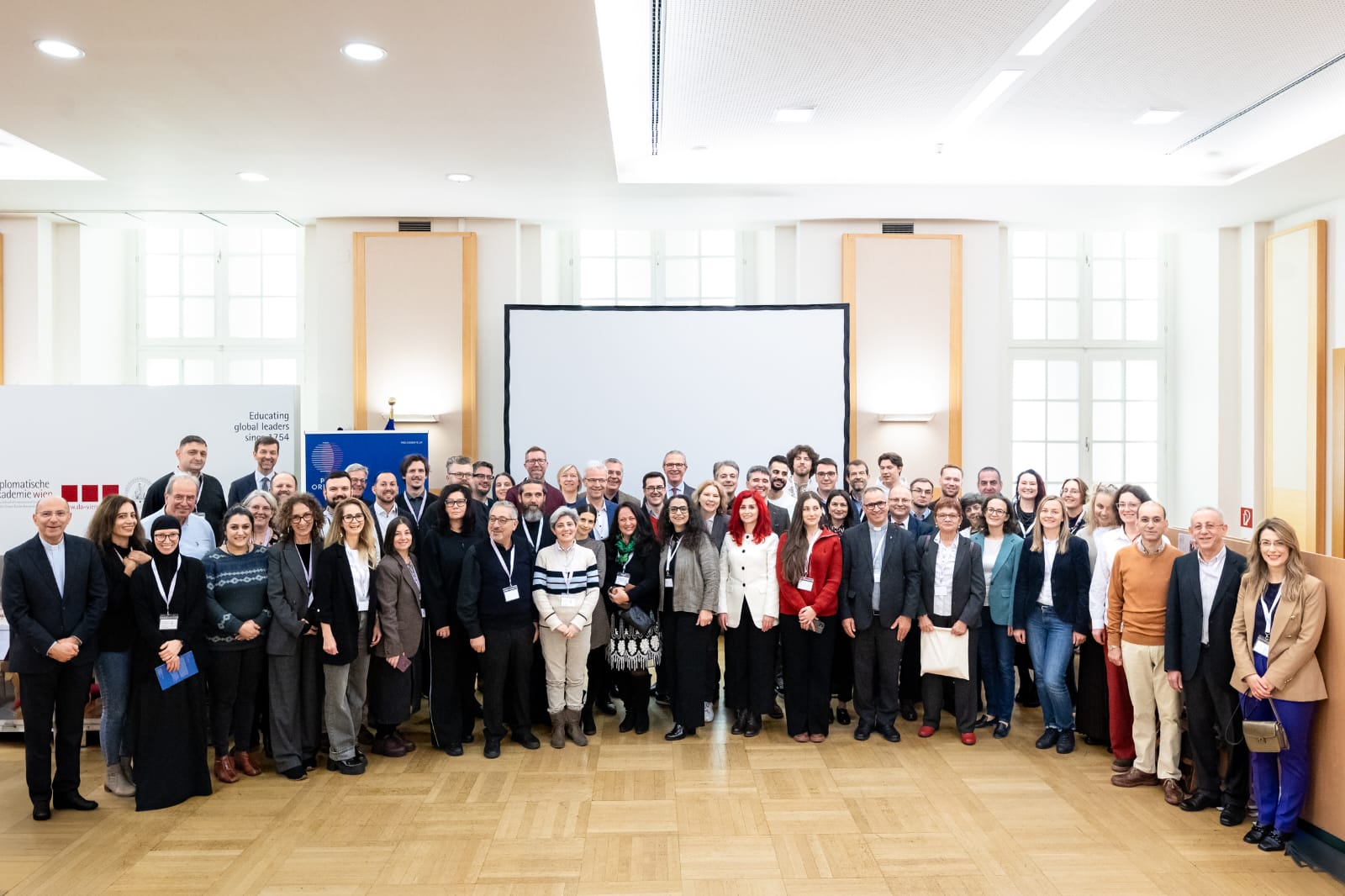
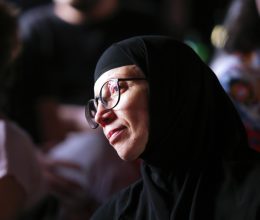
With the blessing of her Elder, Bishop Partenij of Antania, the Rajčica Monastery was represented at this significant international conference by Nun Efimija, who, within the framework of her doctoral studies, offered an academic contribution to the topic. She raised important questions concerning the existing boundaries—but also the possibilities—for dialogue and cooperation between religious communities and political actors.
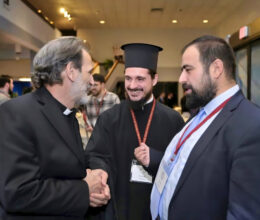
Also participating in the Conference was Stavrophoros Protopresbyter Boban Mitevski, a doctoral candidate at the Faculty of Philosophy at Ss. Cyril and Methodius University in Skopje.
Since the conference was held in Vienna, representatives of both the Orthodox and Catholic Churches in Austria were invited to provide insights into their cooperation at the local level.
The conference highlighted the interconnectedness and tension between concrete challenges and fundamental theological issues. The focus was placed on questions of trauma and spirituality, the relationship between clergy and faithful, the need for networking and stronger cooperation among churches and socio-political actors on all levels, and the importance of adopting a non-violent and respectful language—both within the Church and in the media.
Dialogue and personal testimonies regarding experiences of war and oppression made it clear that theological and ecclesial exchange cannot bear fruitful results if detached from such lived realities of injustice, whether current or historical.
As part of the Conference, a public panel discussion was held in collaboration with the Vienna Diplomatic Academy, addressing the question: What constructive contribution can religion make to overcoming and transforming wars and social conflicts?
Project coordinator Viola Raheb emphasized that an essential aim throughout the project was to give voice to “functional, successful local initiatives from the regions that offer concrete contributions to overcoming prejudice and violence and to promoting peace.”
Prof. Regina Elsner, spokesperson of the Commission’s working group, stated:
“Both this conference and the project as a whole demonstrated that all processes of reconciliation must take into account the realities of people on the ground if their outcomes are to be effective. It is impossible to reach a common agreement without transforming the concrete structures of injustice—structures for which the churches are often partially responsible, either actively or through silence.”
The President of PRO ORIENTE, Mr. Clemens Koja, expressed his gratitude to the participants for their active engagement, noting:
“Throughout the project, it became increasingly evident that focusing solely on wounded memories is not enough, as new wounds continue to be inflicted in the regions today.”
Sister Efimija holds a Master’s degree in Constitutional Law and is a doctoral candidate whose academic work spans a broad spectrum of issues related to church–state relations, religious freedom and law, models of secularity, and the contemporary challenges of pluralistic societies. Her scholarly engagement enables these topics to be examined through precise legal, theological, and social lenses, offering a significant contribution within the context of such international forums.