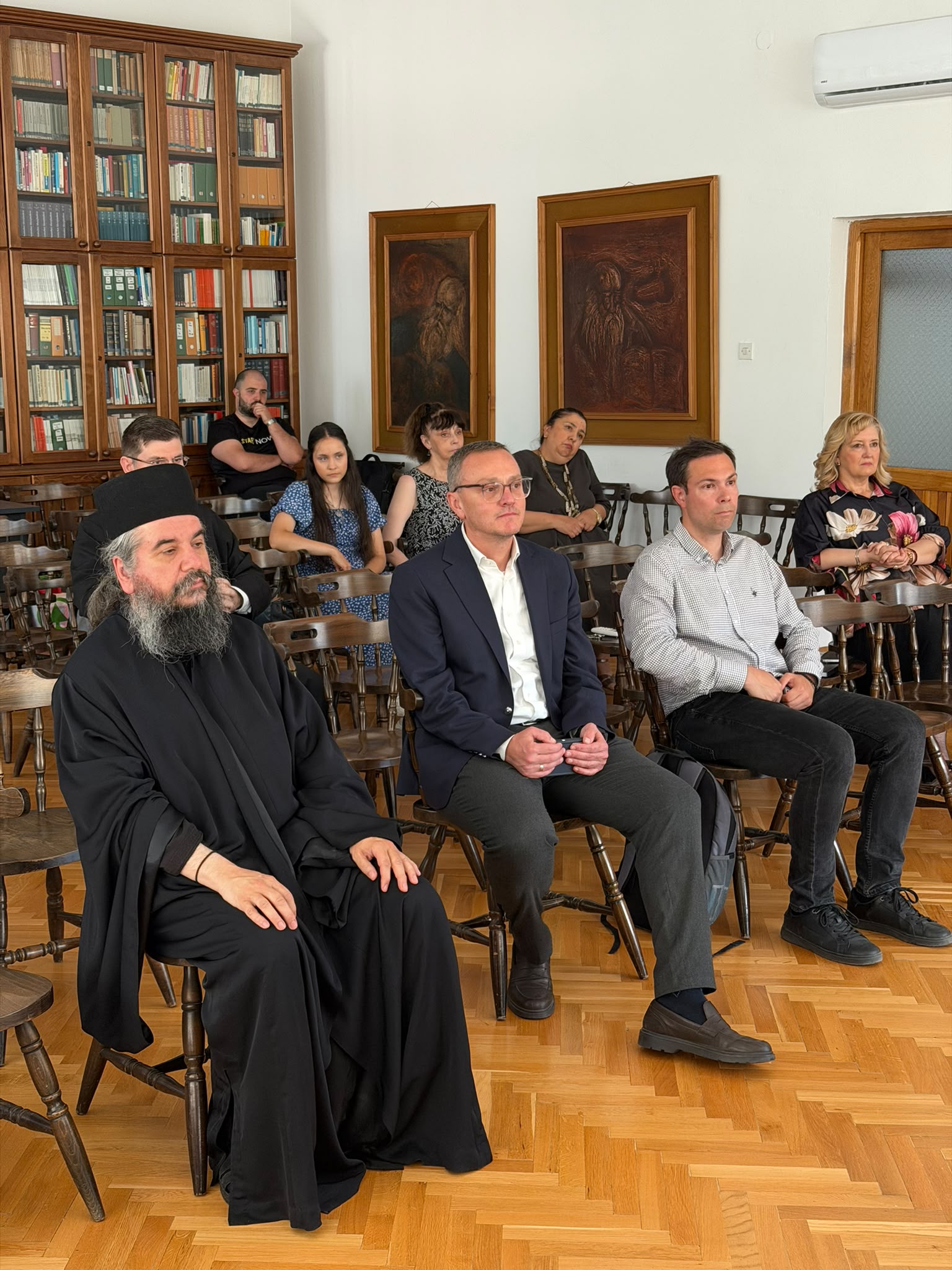
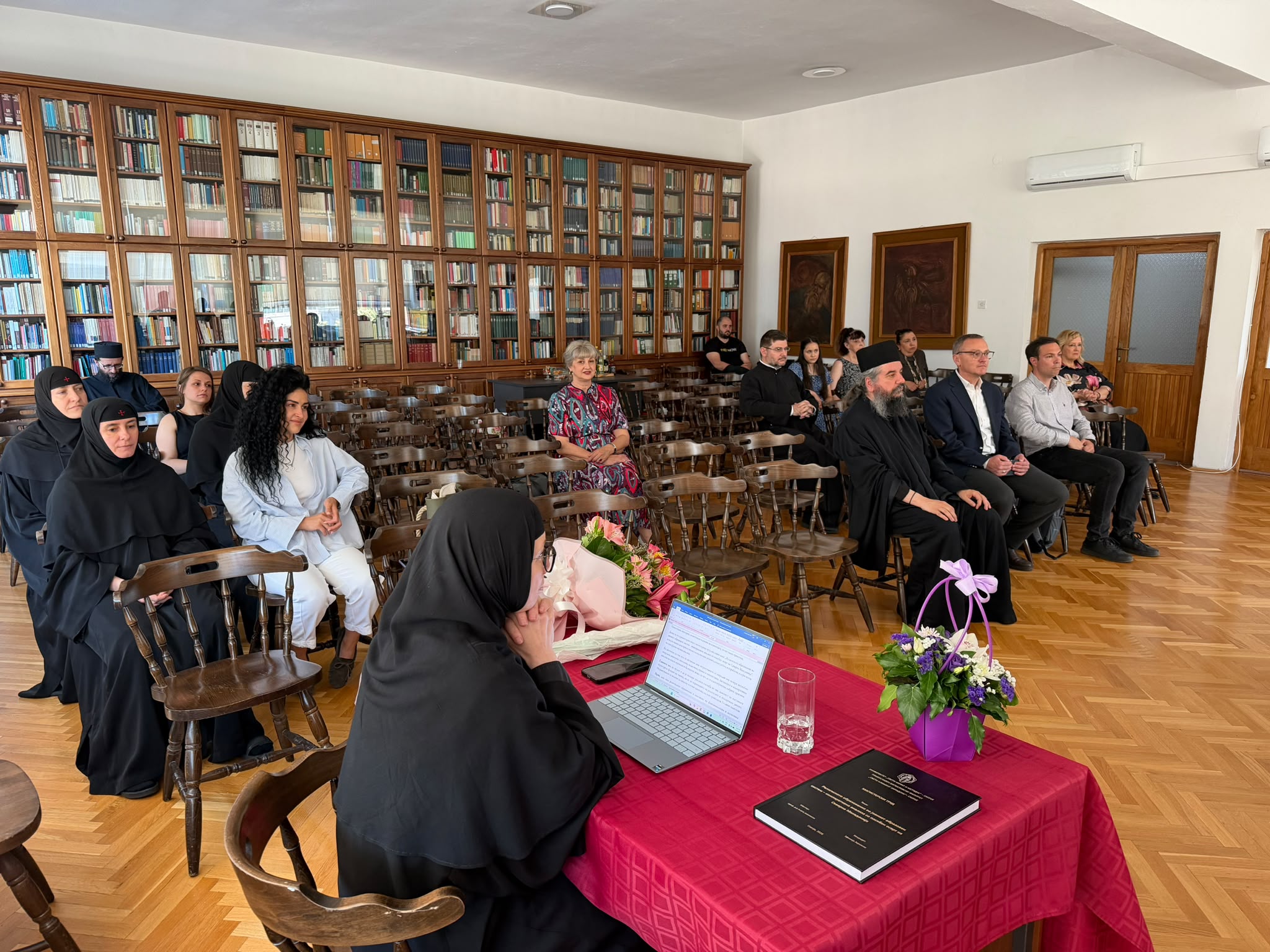
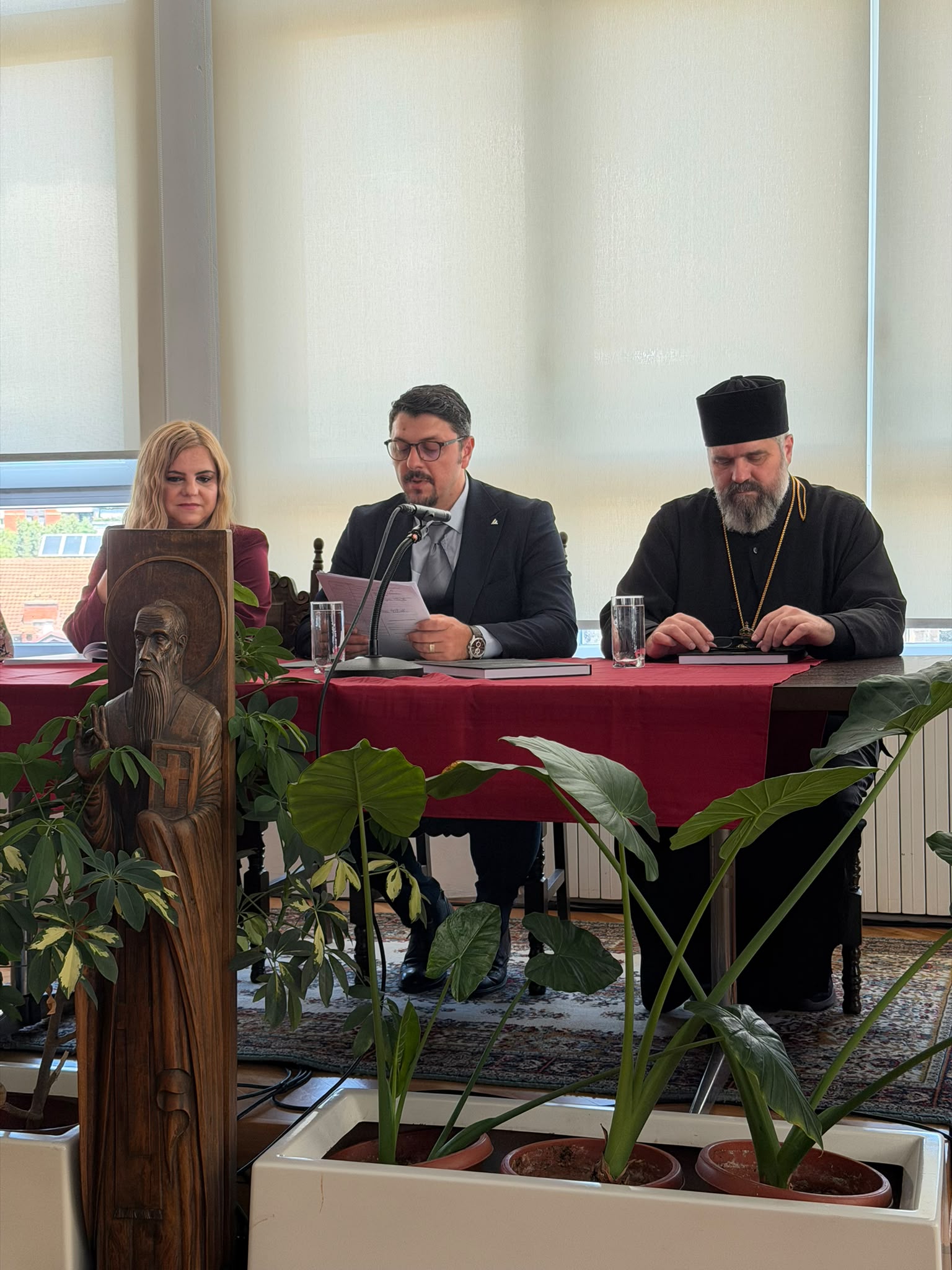
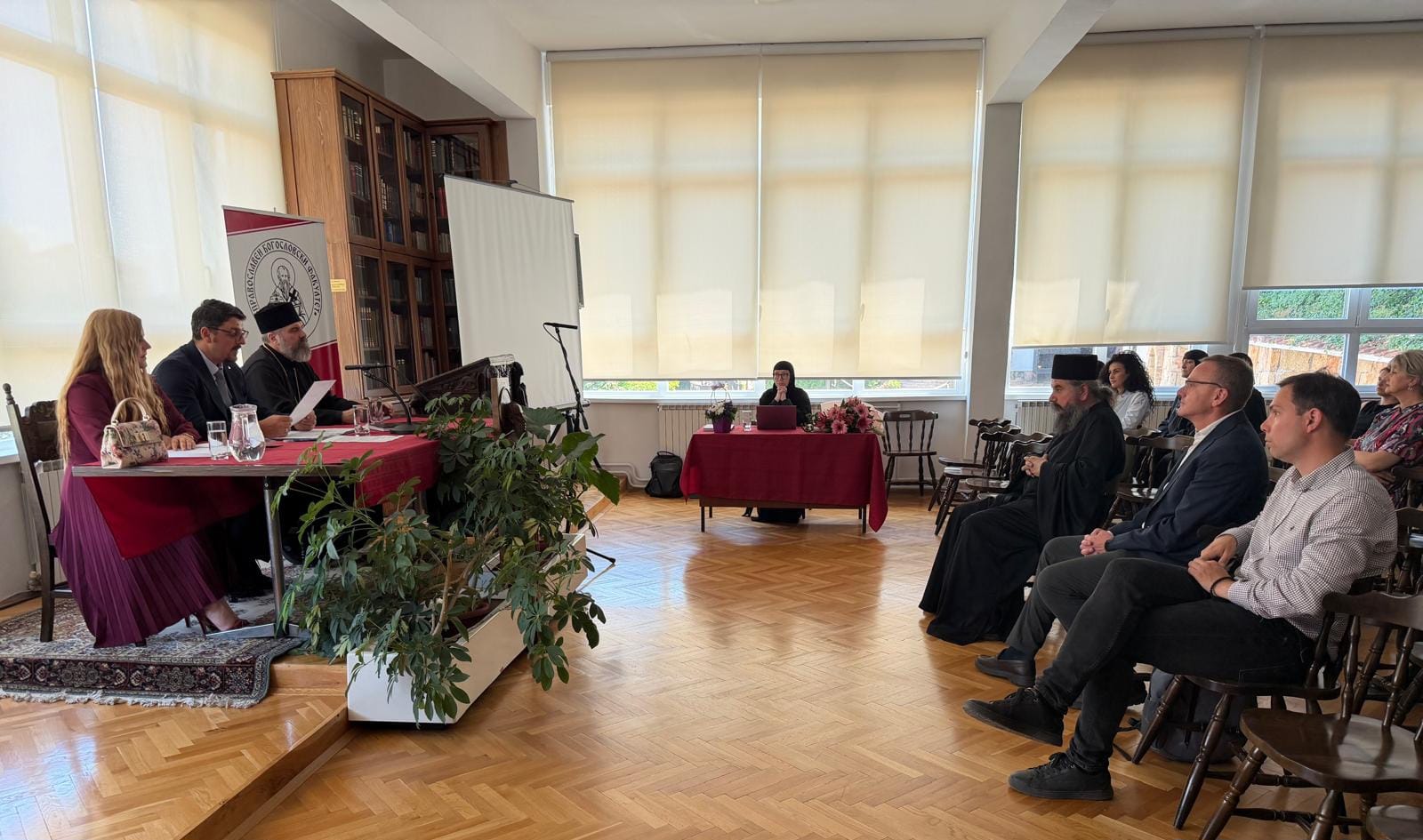
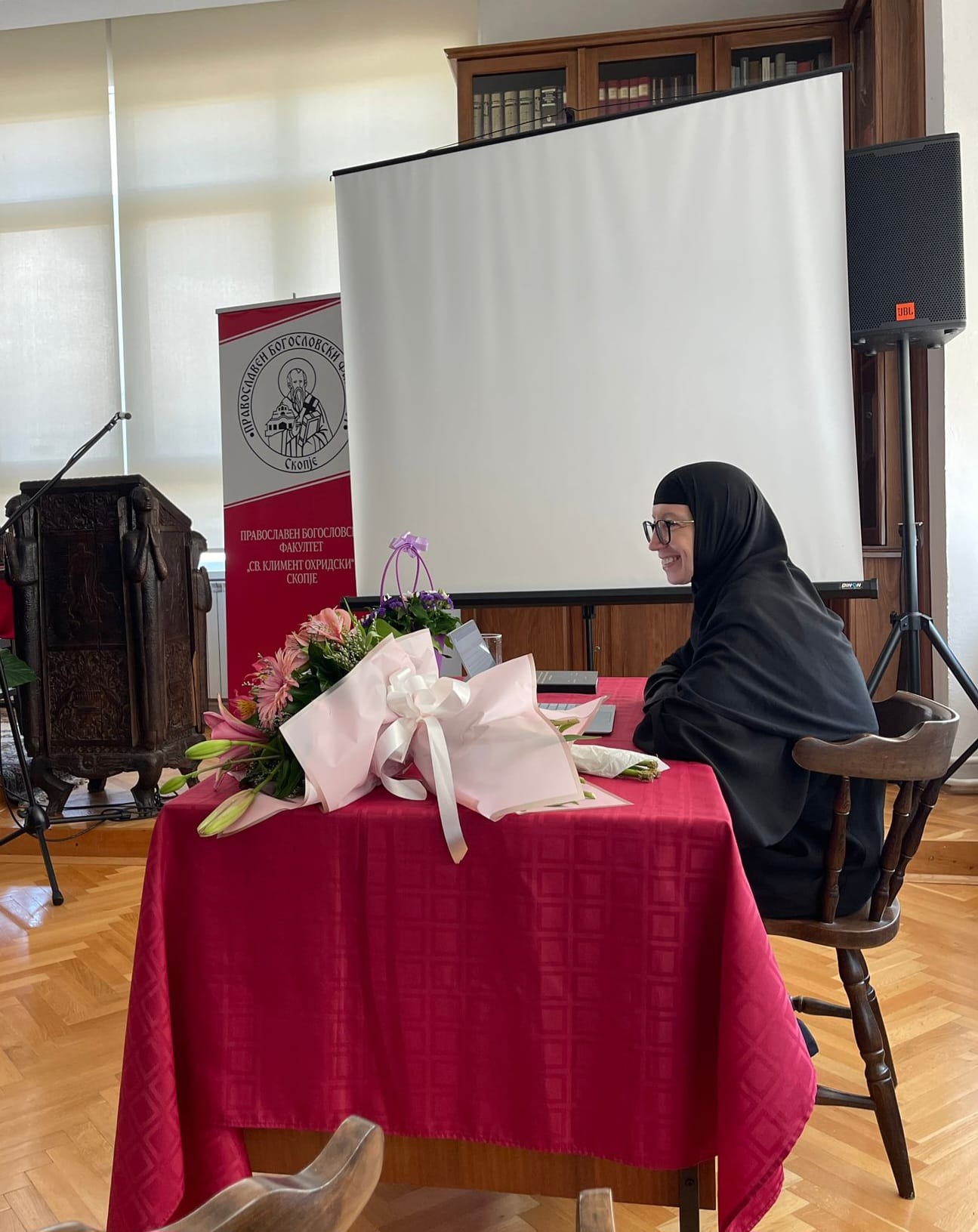
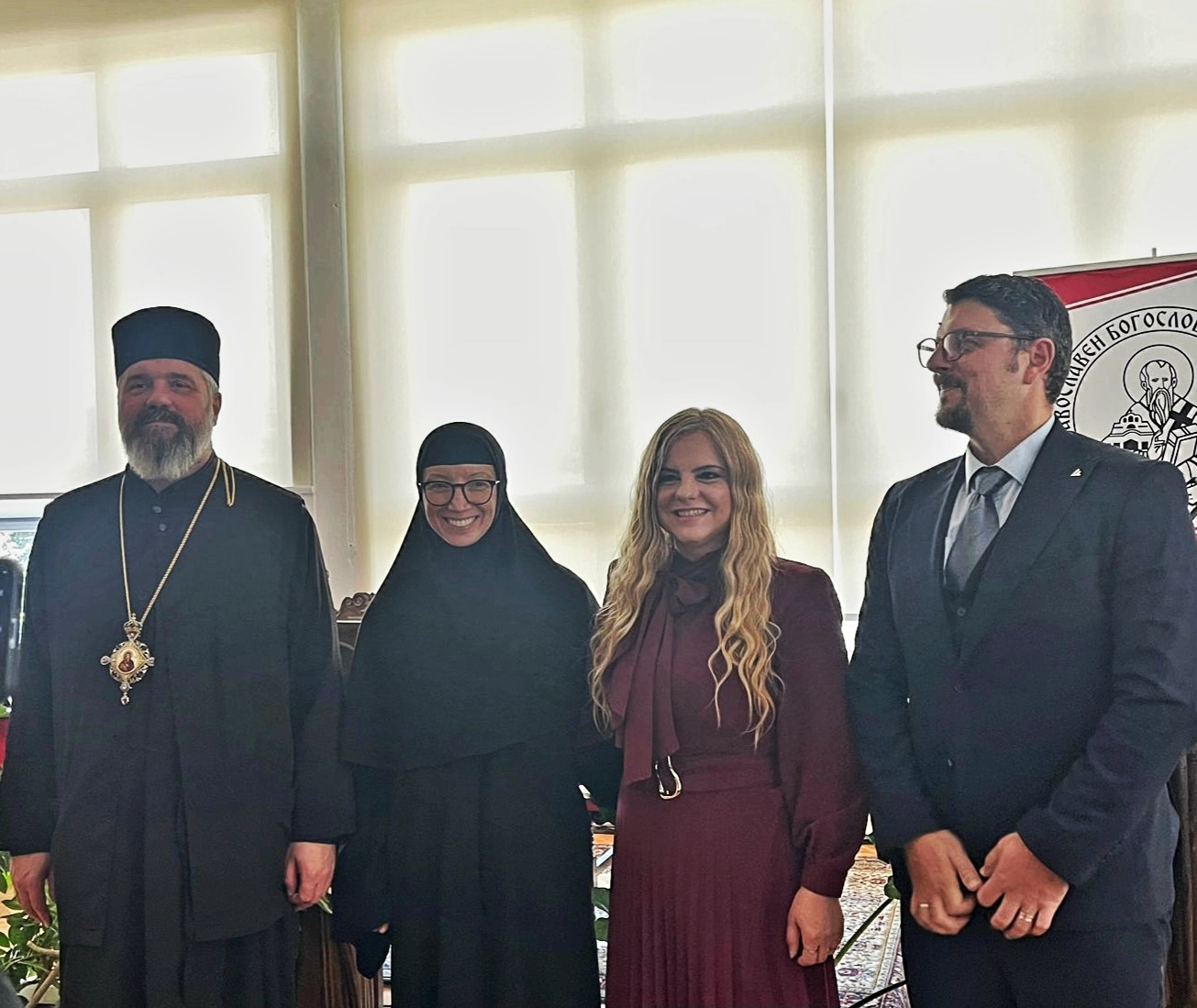
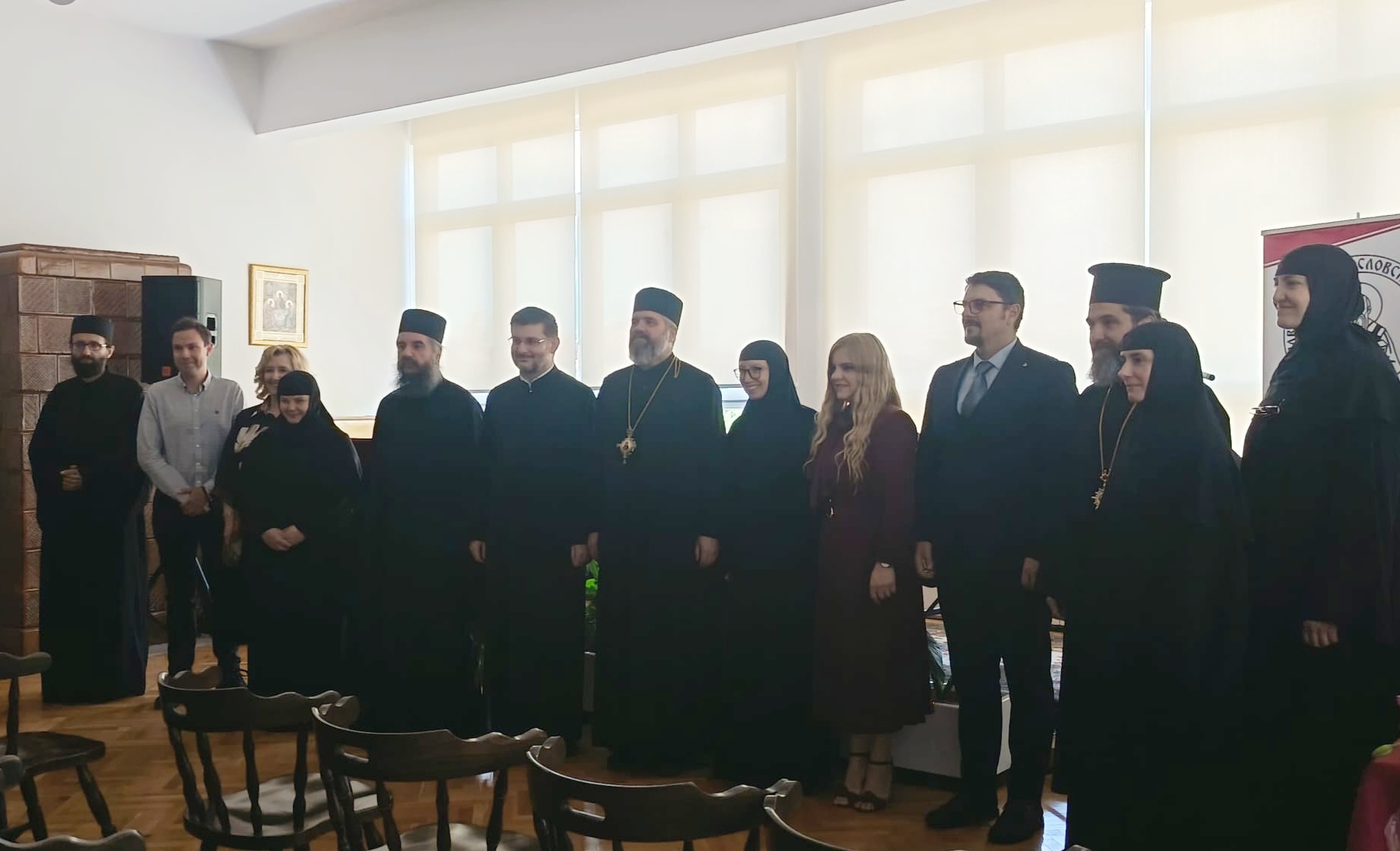
On 9 June of this year, with the blessing of her Elder, His Grace Bishop Partenij of Antania, Nun Efimia of the Monastery of “Saint George the Victorious” in Rajčica successfully defended her second master’s thesis.
The thesis, defended at the Saint Clement of Ohrid Orthodox Faculty of Theology in Skopje, is entitled: “Religious Education in the Public Education System – A Comparative Analysis with Special Reference to North Macedonia.” The supervisor of this significant academic work was Prof. Dr Aneta Jovkovska, while the other members of the examination committee were the esteemed Metropolitan of Debar and Kičevo, Prof. Dr Georgij Gjorgjevski, and Assoc. Prof. Dr Darko Anev.
The research is the fruit of many years of work and cooperation on this important issue, offering a profound theological, pedagogical, legal-political, and socio-scientific perspective. Through a detailed analysis of constitutions, laws, educational policies, as well as an extensive comparative study of European and Balkan models, the author directly challenges the thesis that secularism and religious education are incompatible. In doing so, she also examines the historical context after the Second World War, whose Marxist ideological matrix continues to be reflected even in the contemporary democratic educational context.
The focus of the thesis is placed on the domestic situation, with the central argument that in Macedonia there is no constitutional obstacle to the integration of this form of education, but rather that the problem lies in a restrictive interpretation of secularism.
For the purposes of the thesis, two significant studies were conducted: a quantitative empirical study using the CATI method, carried out on a sample of 1,200 respondents, and an exploratory study with parents, conducted through the Google Forms platform.
The principal problem identified in our context is the very limited time allocated to the subject Ethics in Religions — only 36 classes in a single semester in the sixth grade — which makes it impossible to fully realize its educational and formative potential.
The thesis also offers concrete recommendations to the institutions: restoring the previous compulsory-elective status of the subject Ethics in Religions, providing a systemic solution for the employment of theologians, and gradually expanding the subject across several grades.
During the defence, Nun Efimija demonstrated a high level of academic maturity, critical thinking, and scientifically grounded argumentation. We express our sincere gratitude to the supervisor and to the members of the committee, and we extend our heartfelt congratulations to Nun Efimija, with wishes for continued academic success and, above all, an unceasing striving toward our Lord Jesus Christ.