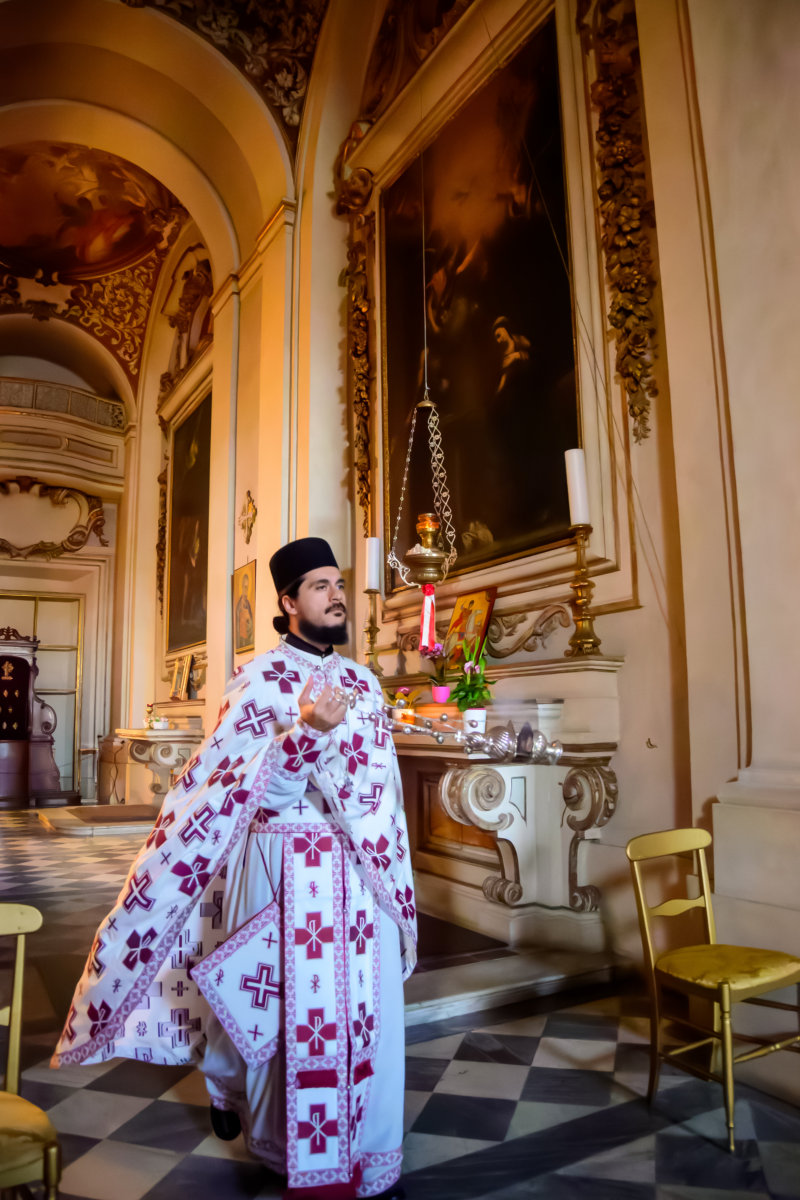
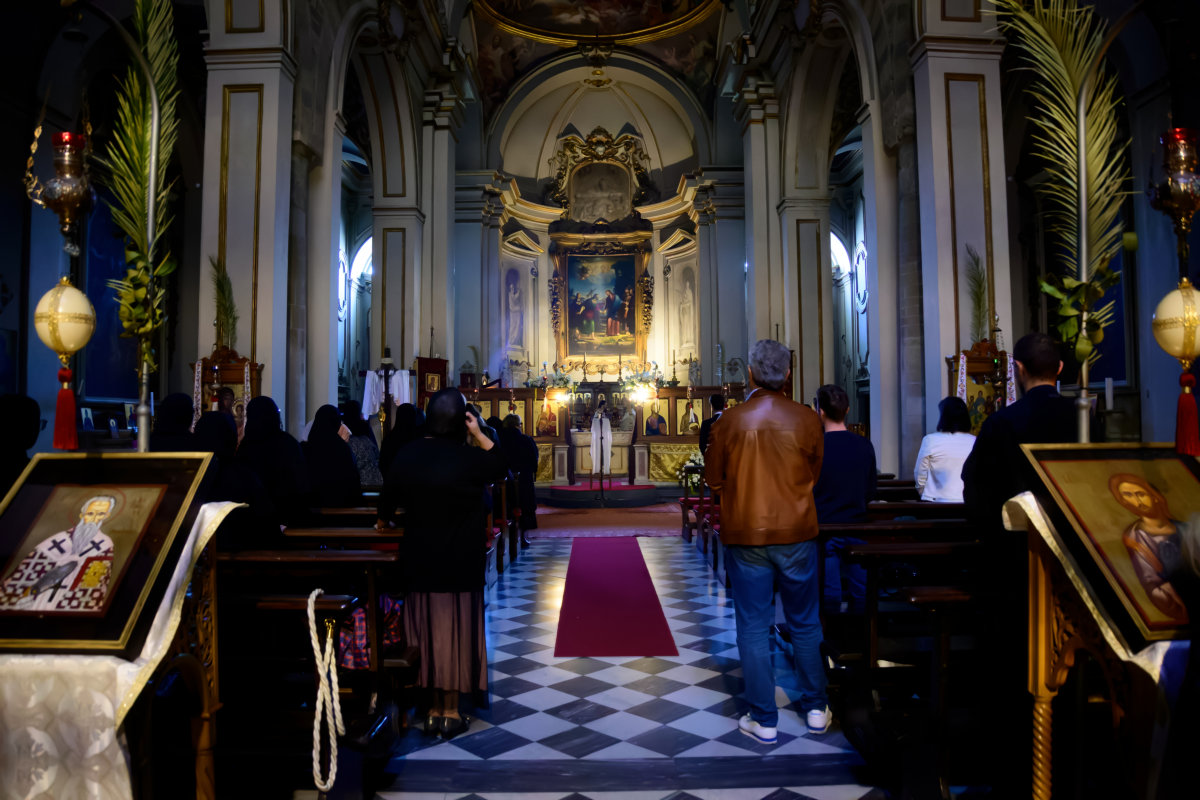
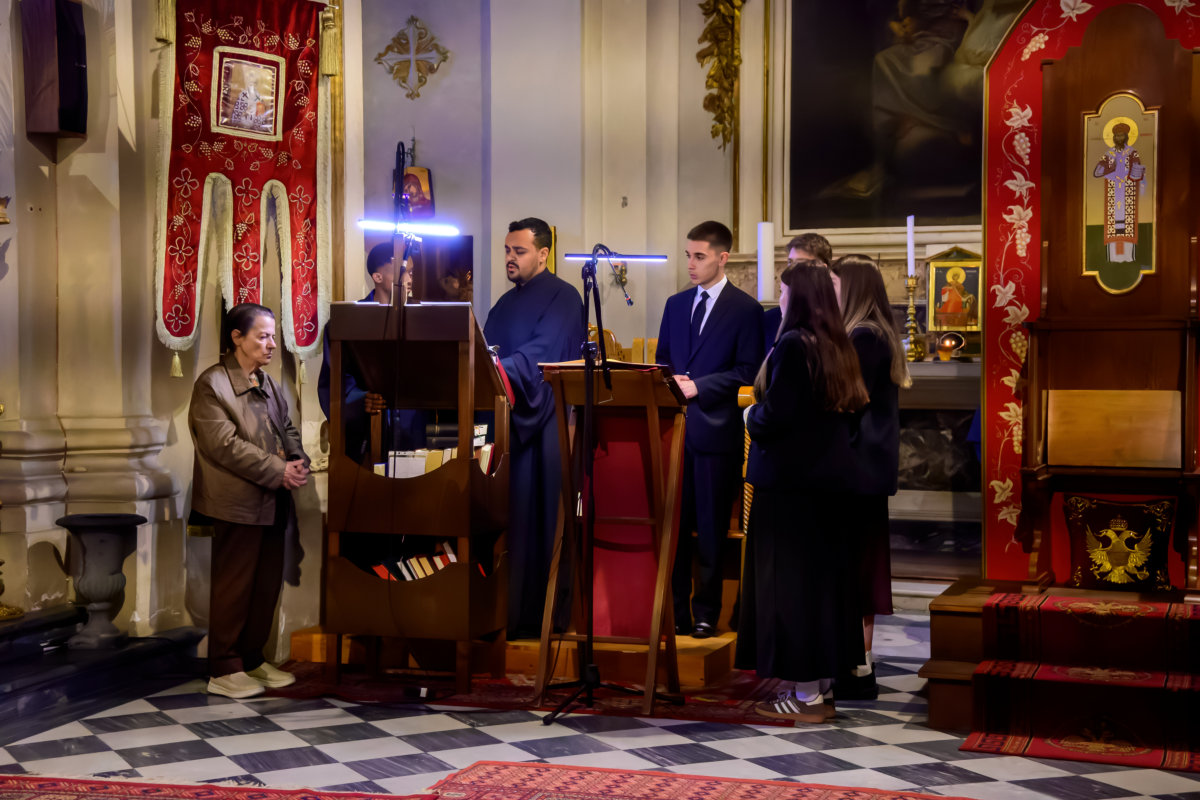
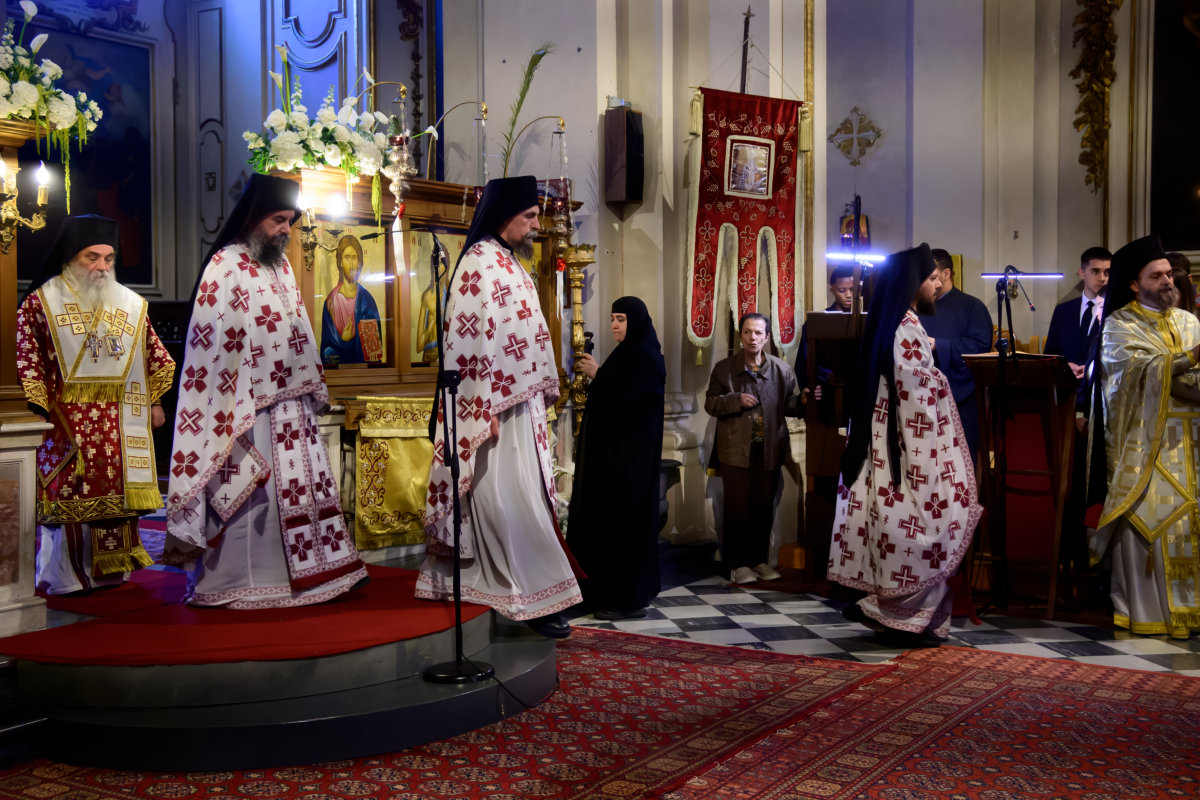
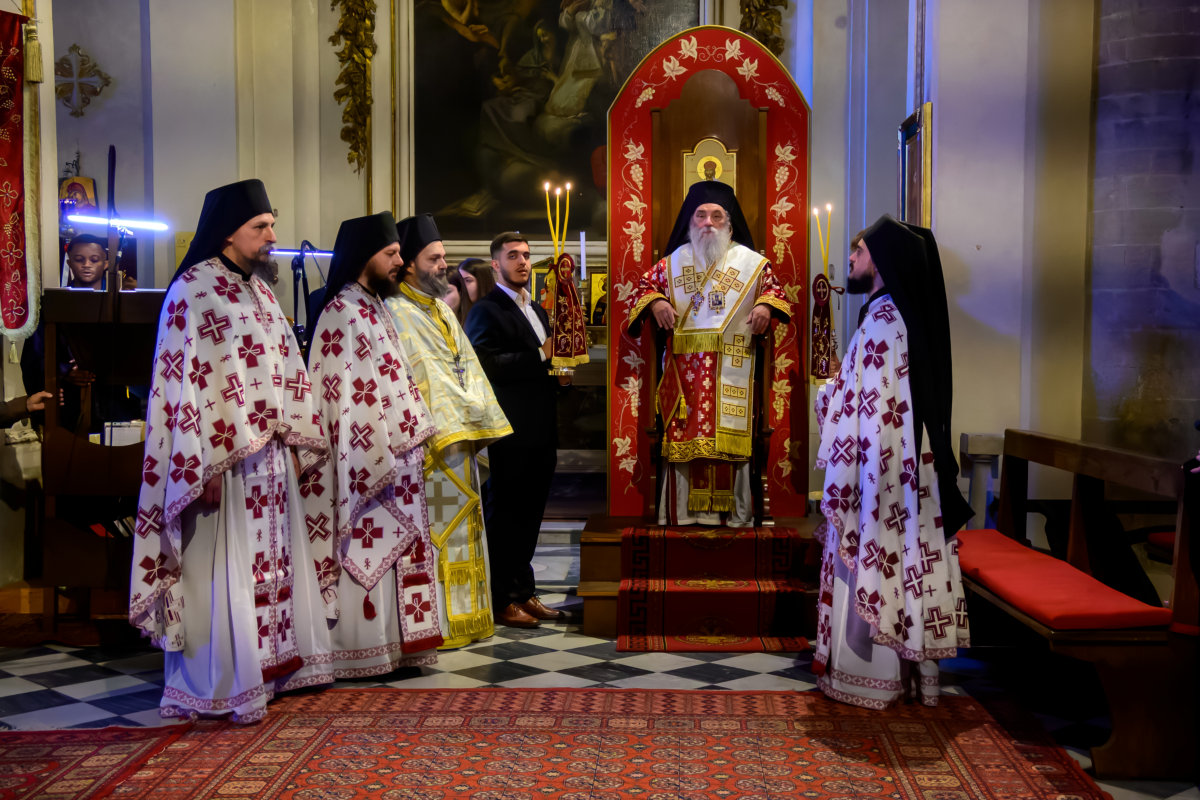
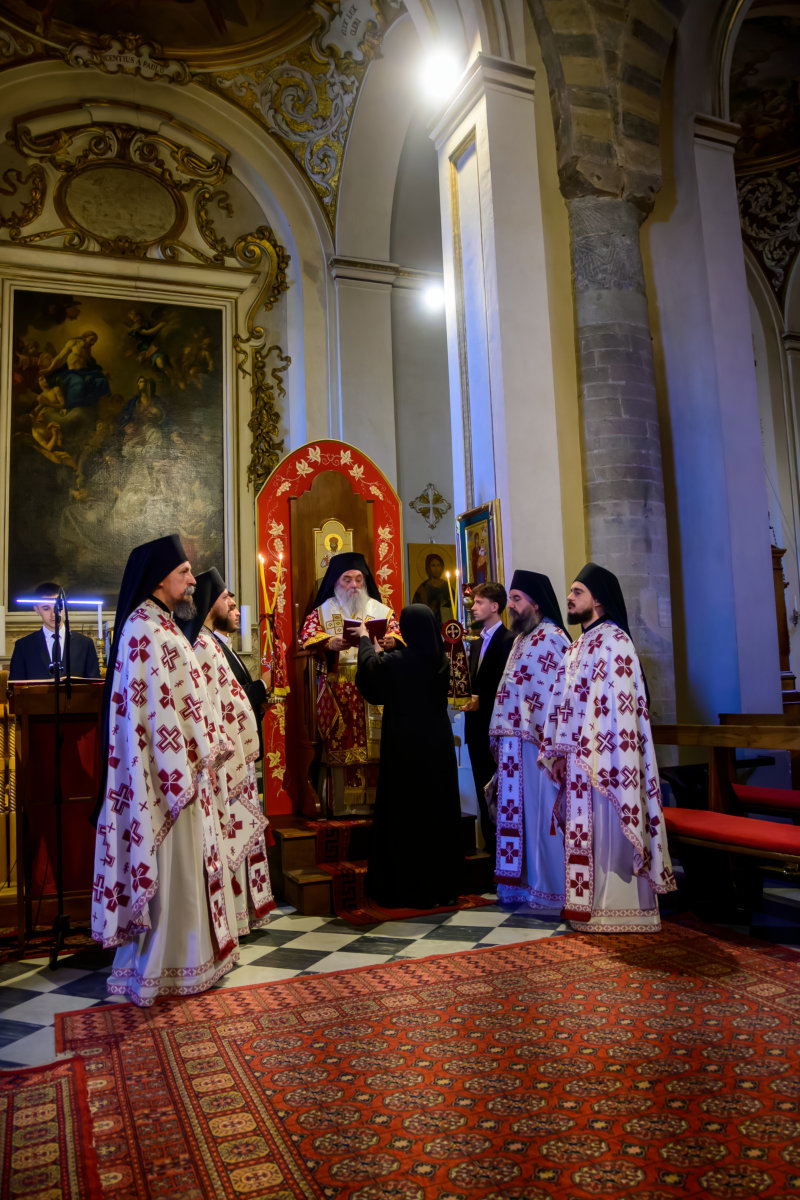
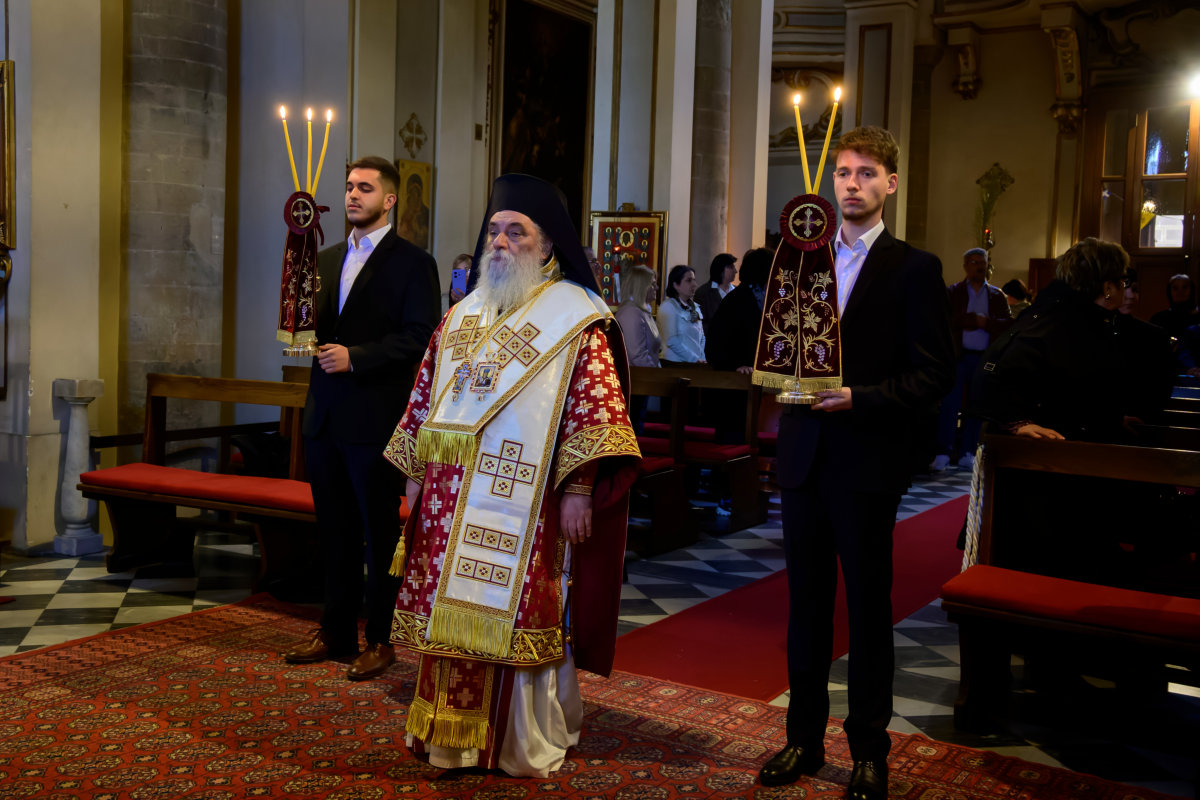
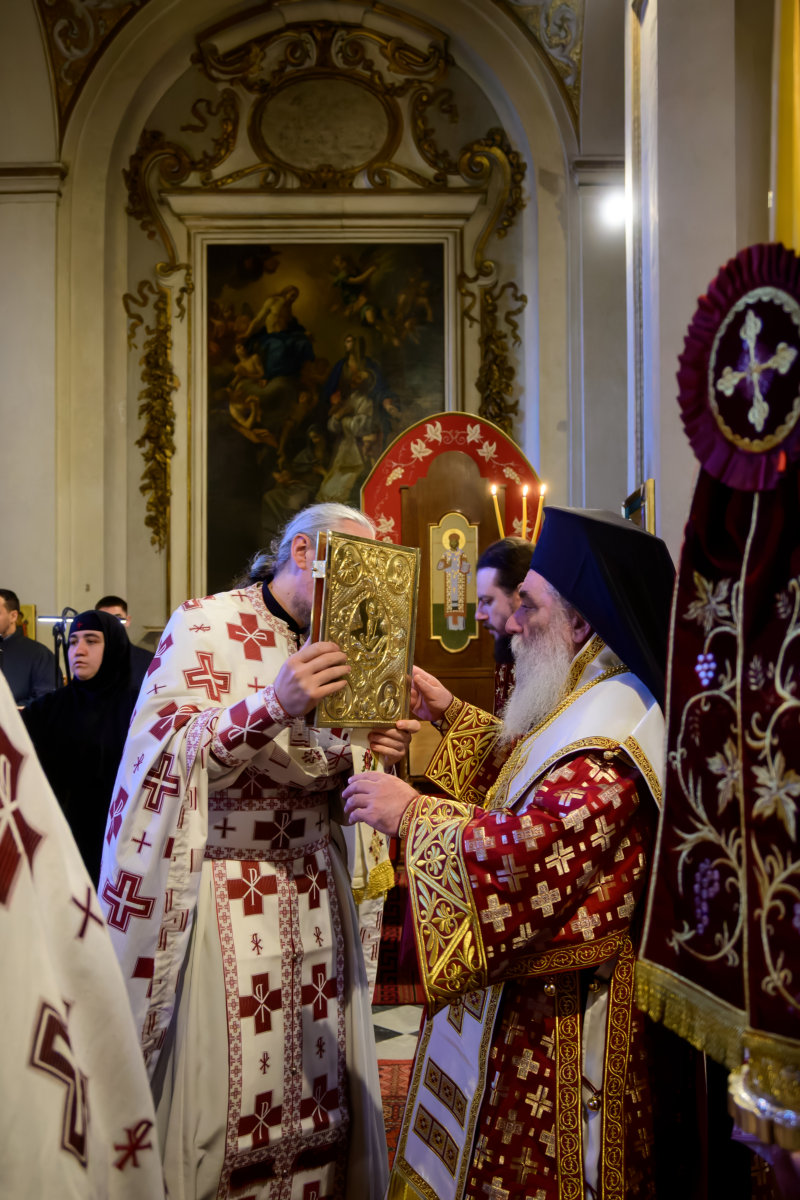
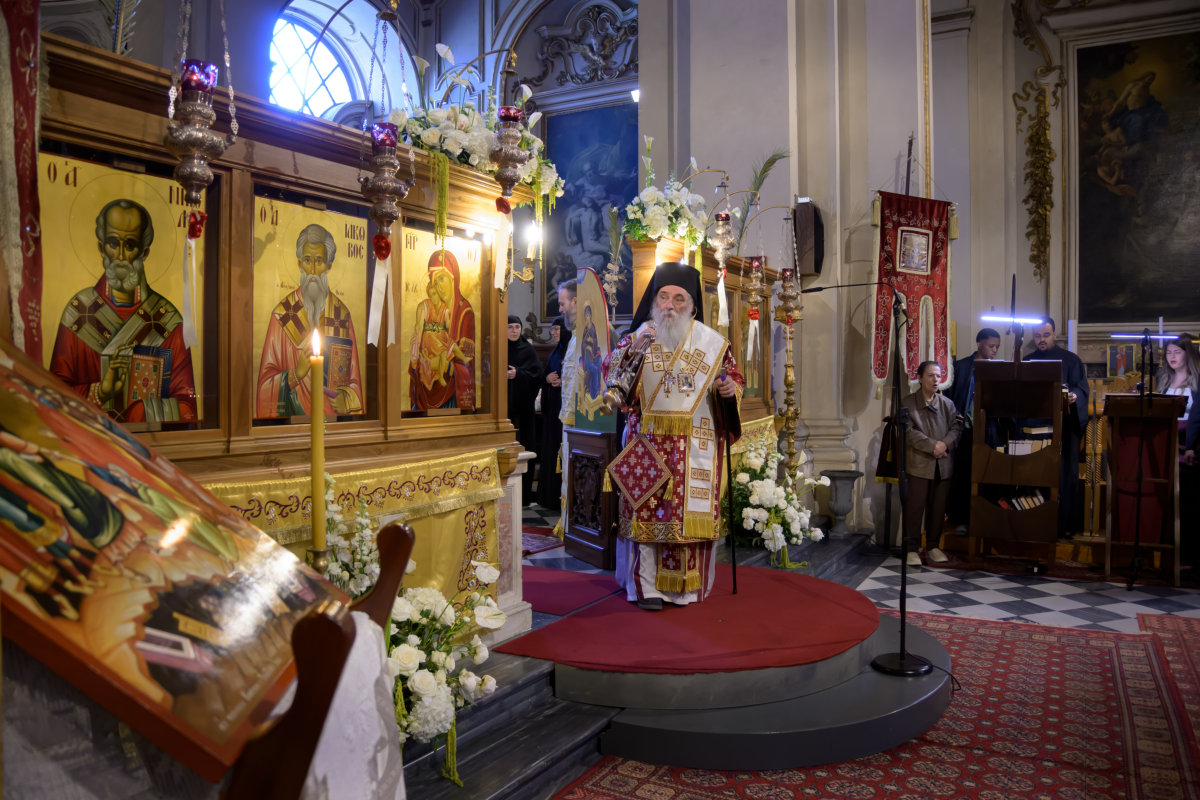
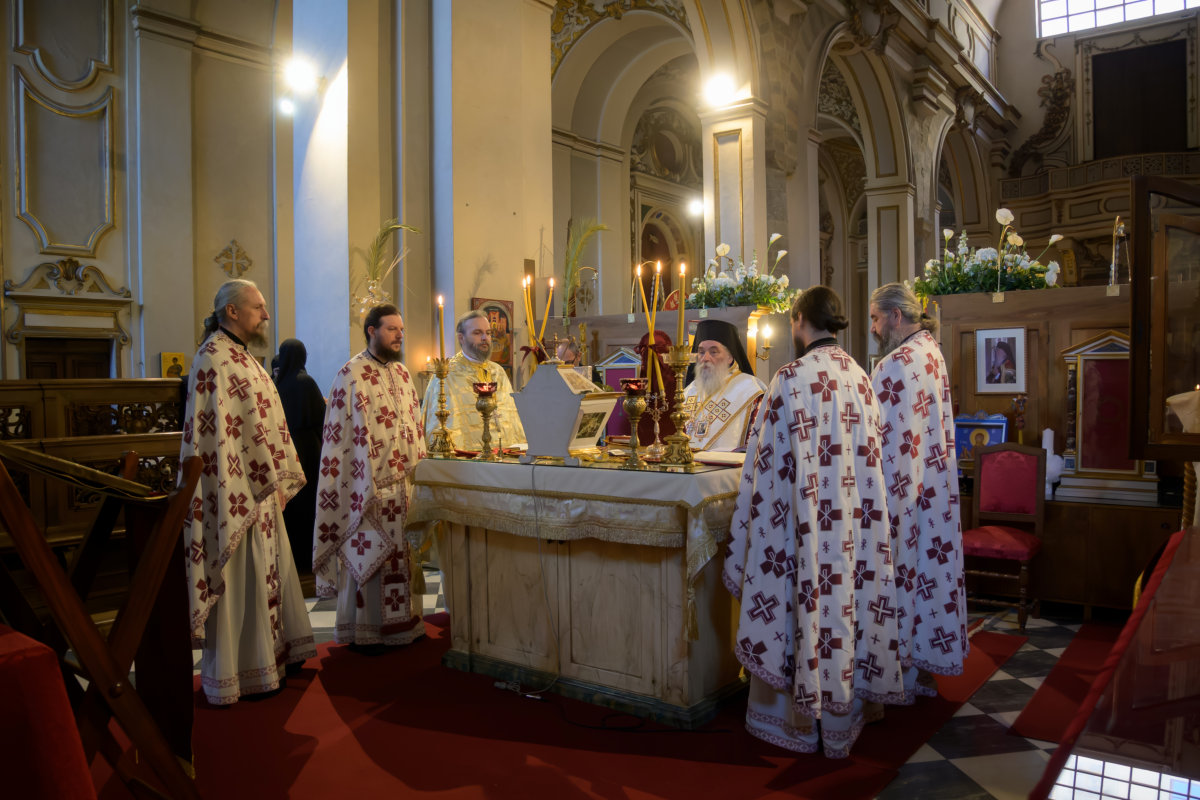
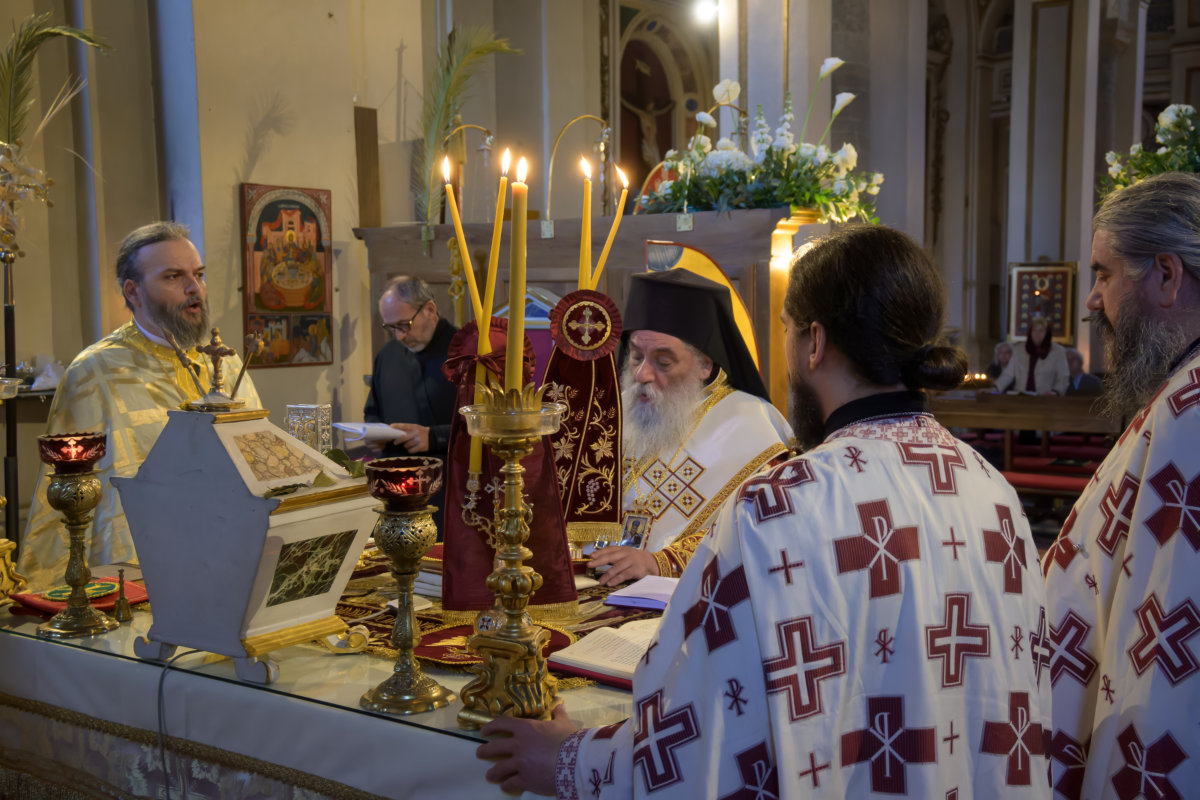
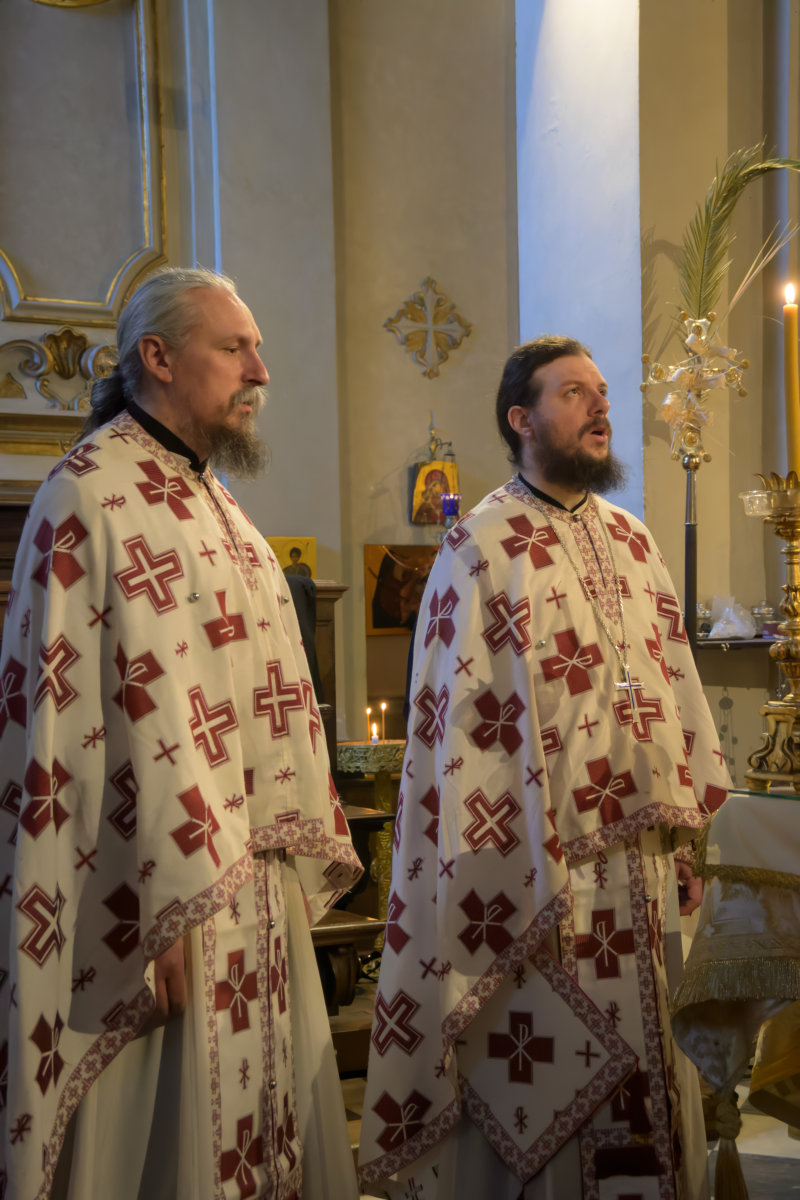
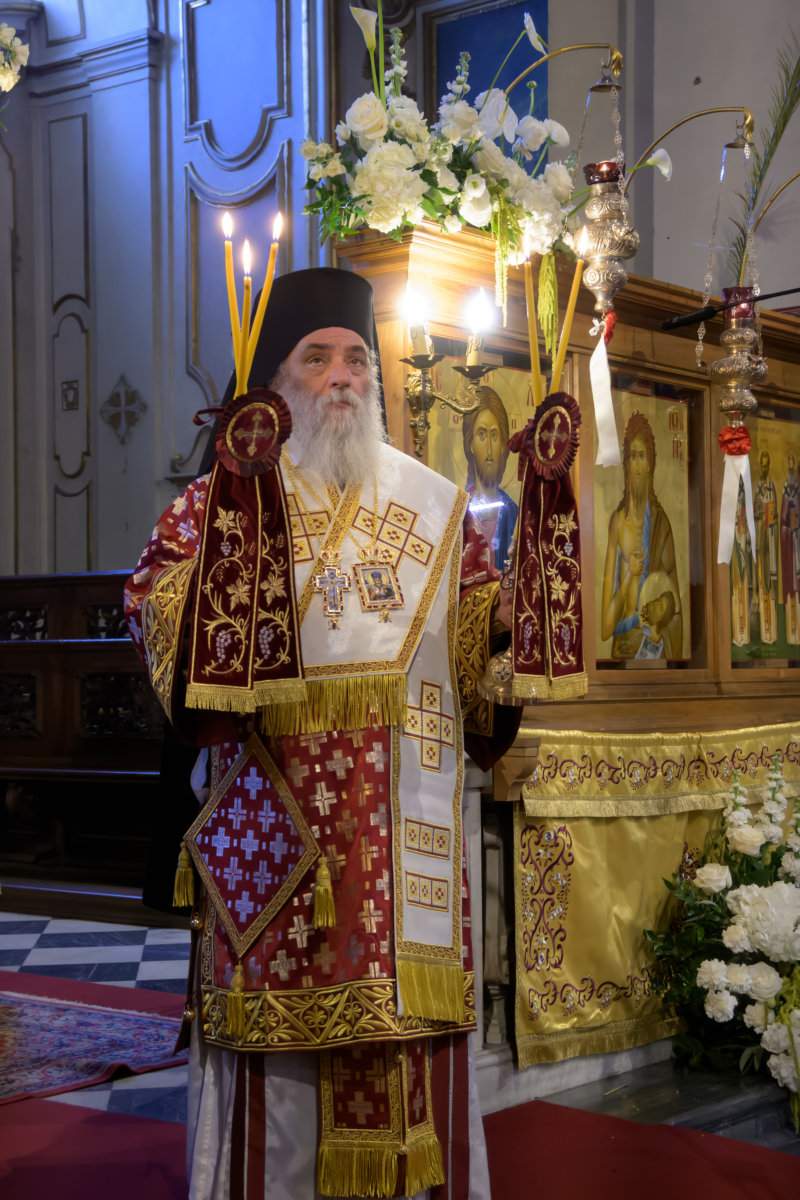
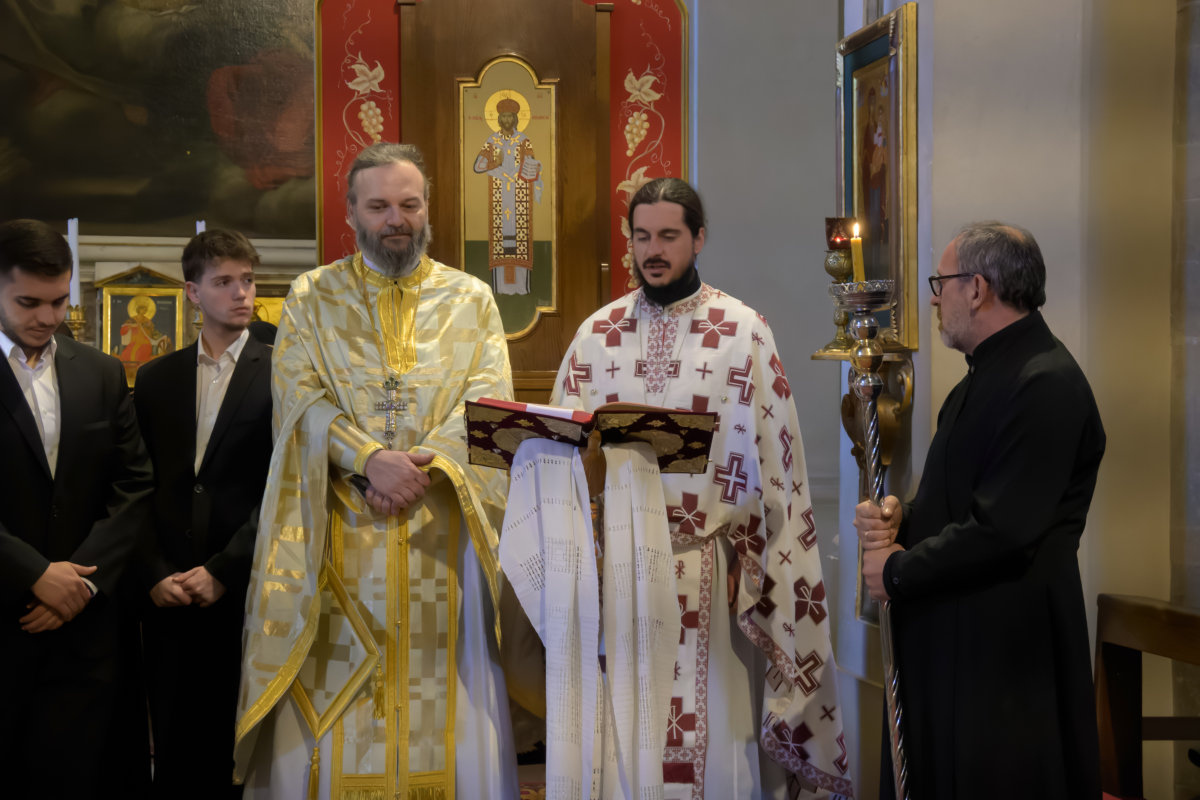
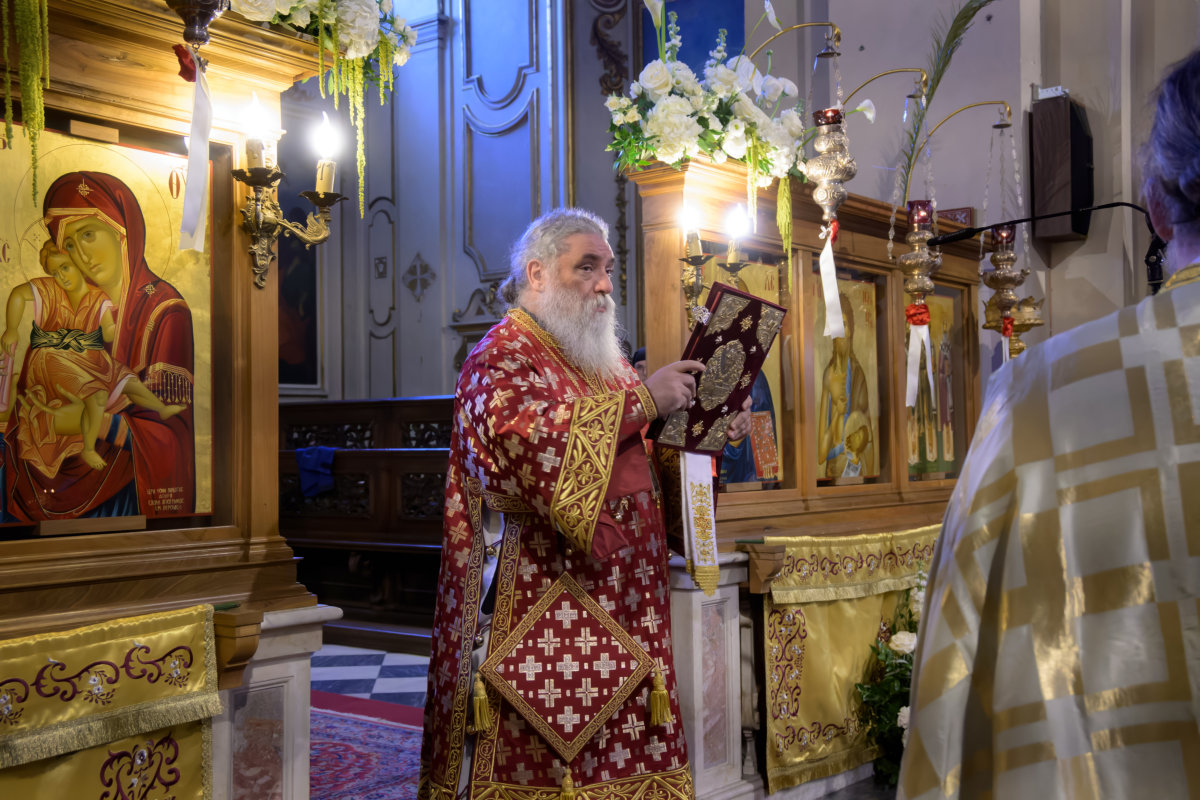
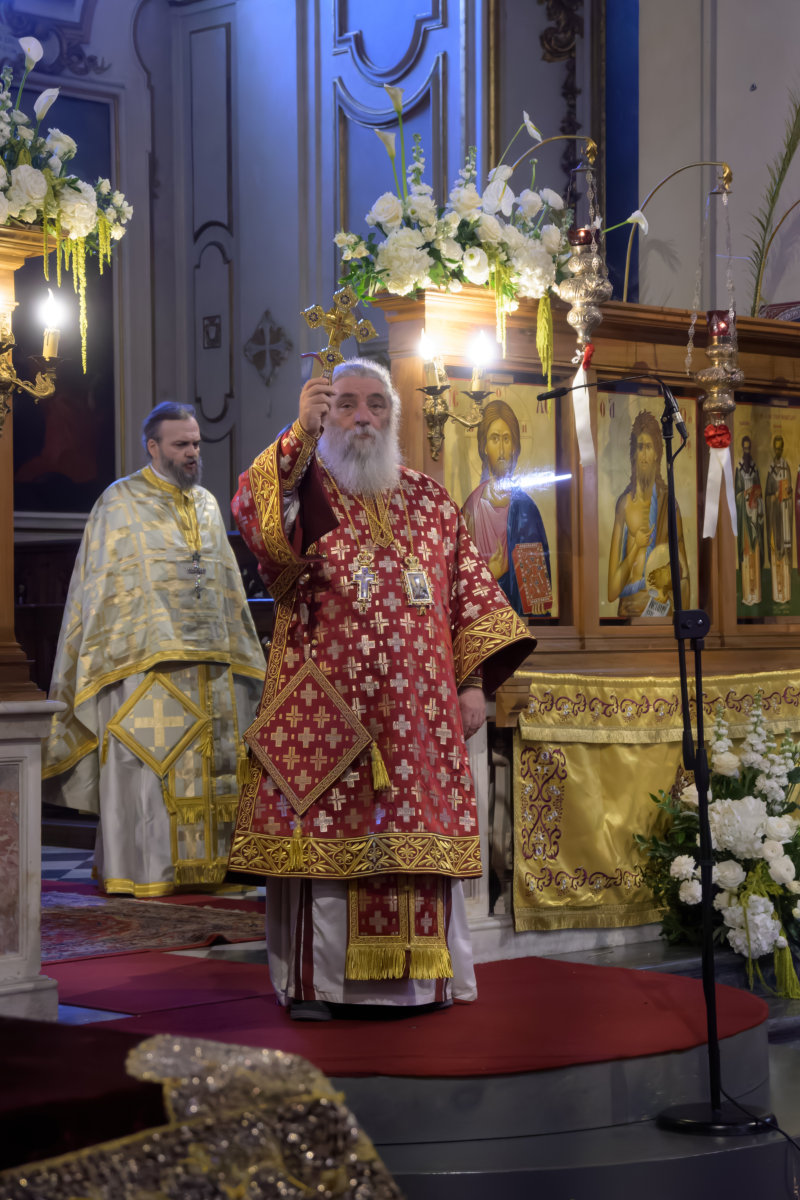
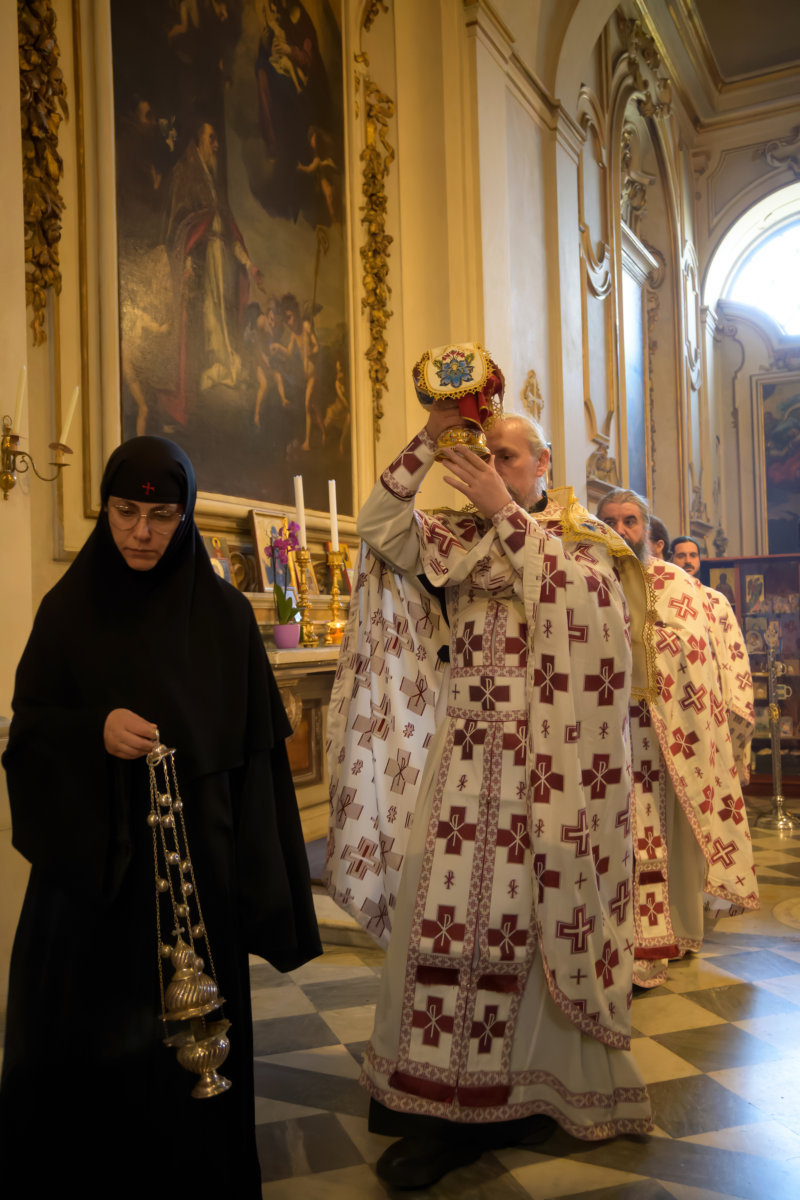
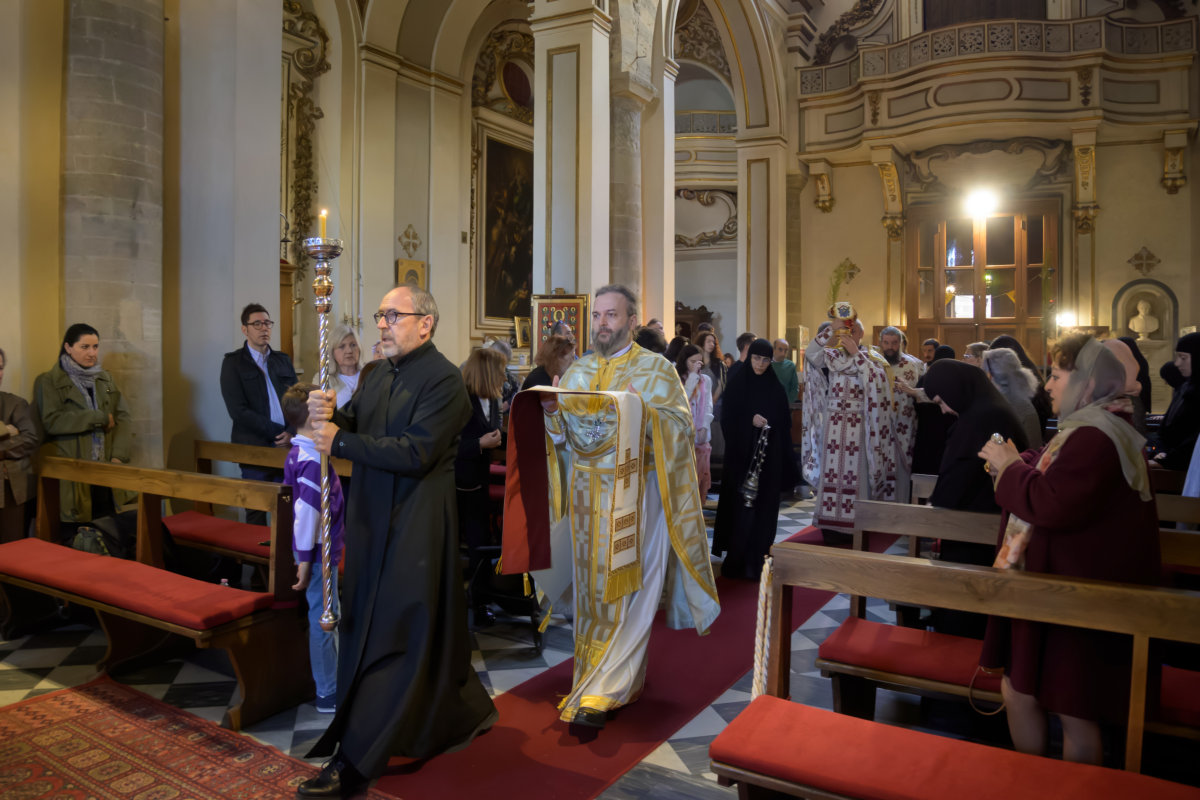
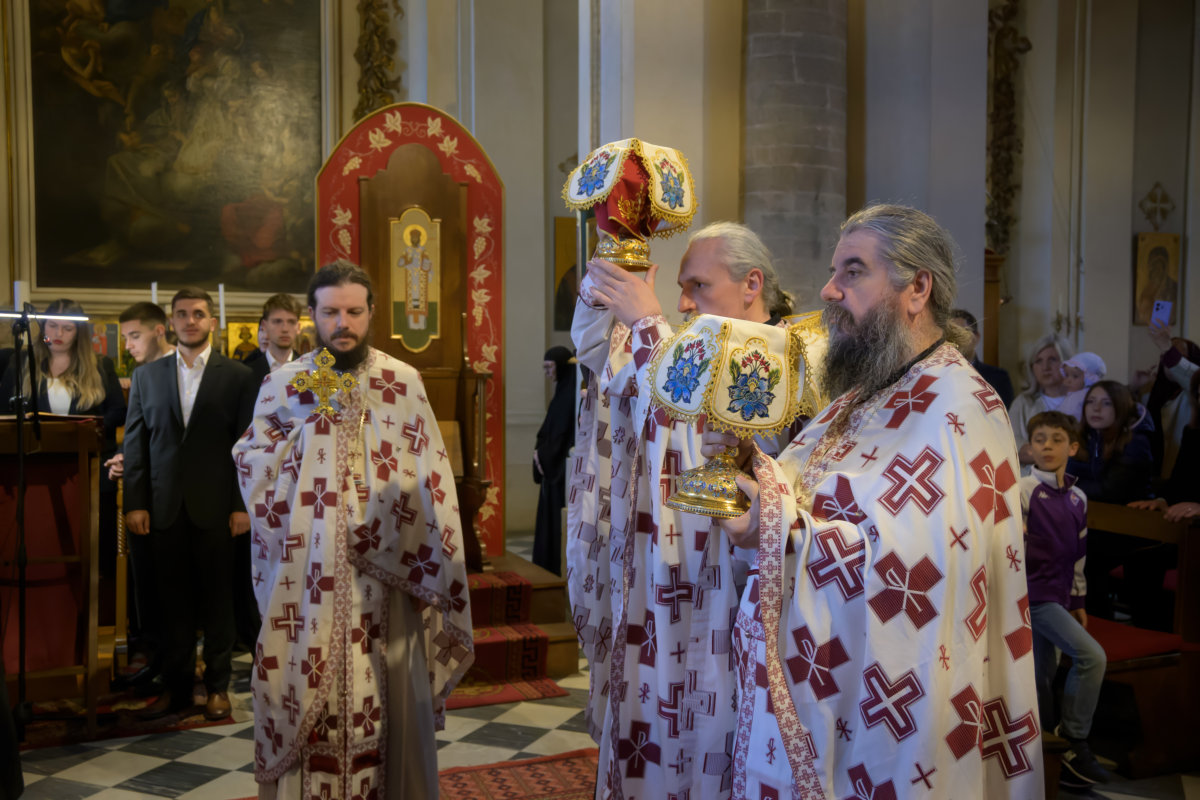
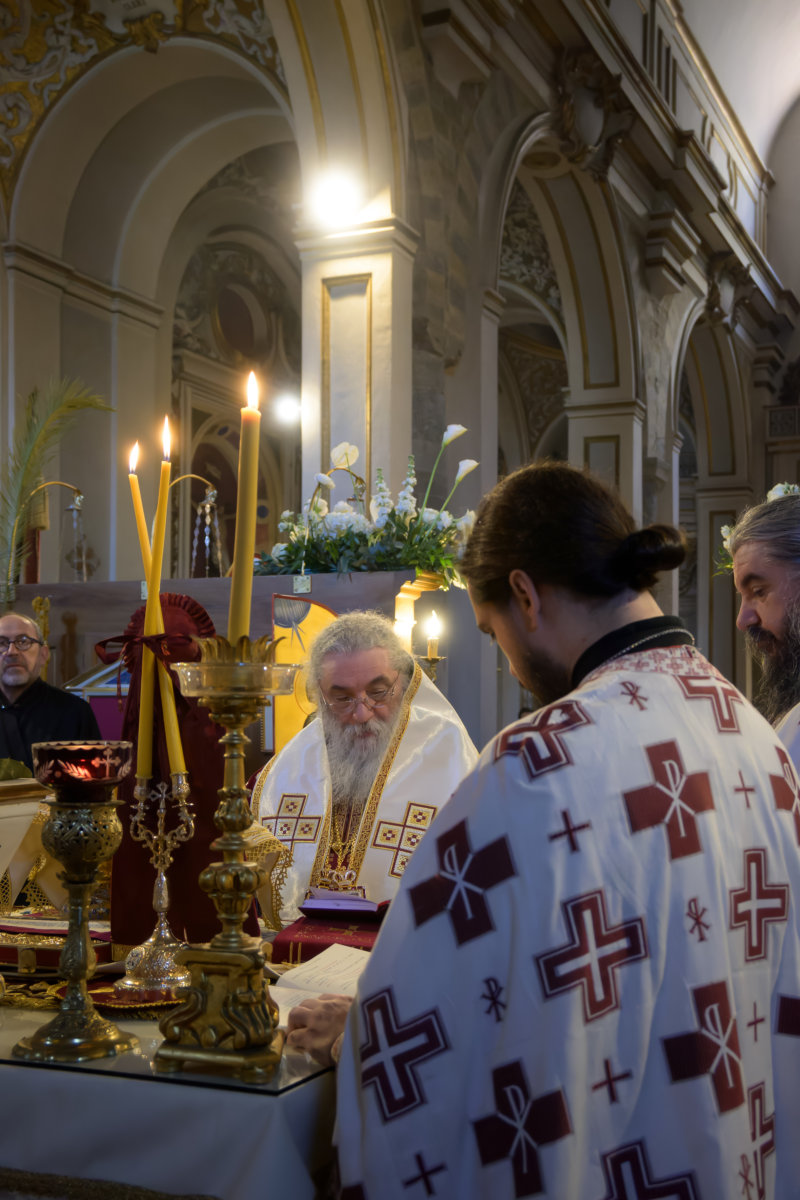
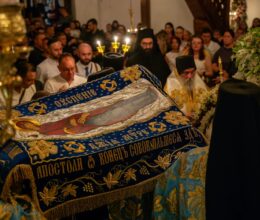
Today, on the joyful Sunday of the Holy Myrrh-bearing Women, our beloved Elder, His Grace Bishop Partenij of Antanis, celebrated a hierarchical Divine Liturgy at the ancient Church of the Holy Apostle James (Chiesa di San Jacopo Soprarno), located in the very heart of Florence, on the banks of the River Arno. Concelebrating with His Grace were the rector of the church, Archimandrite Fr. Nikolaos Papadopoulos, Archieratical Vicar of Tuscany and Liguria, as well as our brethren: Fathers Dositej, Kiril, Anatolij, and Efrosinij.
Joining the Elder and the fathers in this prayerful gathering were also the sisters from our two holy monasteries, Rajčica and Prečista, with whom we are, in these blessed days, on pilgrimage to the holy sites of Italy.
The Church of “Saint Apostle James on the Arno,” which the Florentines—out of evident devotion—have named San Jacopo Soprarno (literally, “Saint James above the Arno”), ranks among the oldest places of worship in what is undoubtedly one of the most beautiful cities in Europe. Originally a Romanesque three-aisled basilica, its existence is documented as early as the 11th century. Over the centuries, this sacred house of prayer has been restored and expanded, so that today its appearance bears the imprint of multiple historical periods. Beneath its prayer-soaked vaults, over ten centuries, countless pilgrims and worshippers have passed, animated by the same faith with which the Myrrh-bearing Women hastened to the empty Tomb on that early morning.
Since 2006, with the blessing of the Archdiocese of Florence, this precious church has been entrusted to the Orthodox Archdiocese of Italy and Malta (under the omophorion of the Ecumenical Patriarchate), and from that time the Eastern Orthodox liturgical life has once again resounded within its ancient walls—in a church which, by its very history, embodies a meeting point between West and East, between the Byzantine and the Romanesque rhythm of the sacred.
Truly great and inexpressible is the prayerful awe of celebrating the Holy Liturgy in a church whose vaults have, for centuries, preserved the whispers of pilgrims and the voices of Renaissance masters, and which today resound with the Paschal proclamation, “Christ is Risen!” Amid such grandeur—architecture that in itself is a masterpiece of Christian sacred art—one comes to understand more deeply what every faithful Christian bears within the heart: that the House of the Lord is everywhere one; that the same and one is the Chalice of Life elevated beneath these vaults as beneath those of our beloved Bigorski Monastery; that the boundaries of style, language, and epoch are but an ornamental veil, while the Liturgy pierces through all ages, transcending all borders, languages, and nations: “Jesus Christ is the same yesterday and today and forever” (Hebrews 13:8). This truth was witnessed today at “Saint James on the Arno,” where the Gospel word and the liturgical prayers were heard in six languages, before the one people of Christ gathered from various nations and lands.
At the conclusion of the Divine Liturgy, Bishop Partenij expressed heartfelt gratitude to our kind and generous host, the Very Reverend Archimandrite Nikolaos, who, with Florentine warmth, opened to us the doors of this blessed church and concelebrated with us in brotherly love. His pastoral labor in distant Tuscany and Liguria, in the very cradle of the Renaissance, stands as a testimony that the Church knows no foreign land: wherever the holy Chalice and the holy Diskos are raised, and wherever the Gospel is read and lived, Christ remains the same.
With this hierarchical Divine Liturgy, our pilgrimage in the blessed land of Italy—a land of so many saints, men and women, of the first Christian martyrs, and of an ancient ecclesiastical tradition—receives its spiritual crowning. In these few blessed days, the Elder, the fathers of Bigorski, and the sisters of Rajčica and Prečista visited places once sanctified by the prayers and ascetic struggles of the first children of Christ; we beheld the tombs of apostles, martyrs, holy men and women, and venerated sanctuaries of the once undivided Christian Church. Now, following the path of the Myrrh-bearing Women, we return home with hearts filled with the same gratitude: that the Lord has deemed us worthy, as He did them, to hasten toward the Risen One and to find Him where He ever awaits and gives Himself—in the Chalice of Holy Communion.
Christ is Risen! Truly He is Risen!